








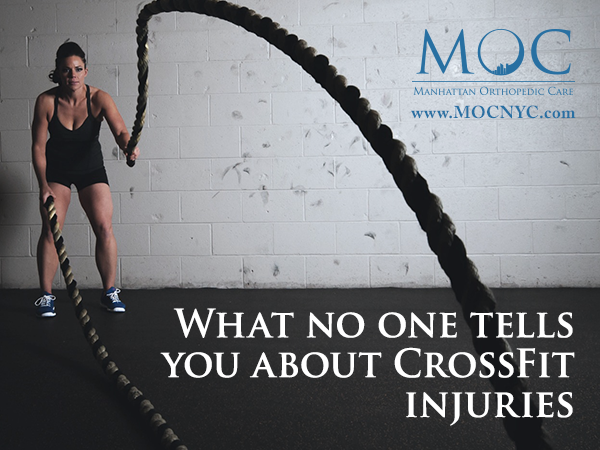
What No One Tells You About CrossFit Injuries
CrossFit is a demanding and rewarding fitness discipline that builds strength and community. However, like all high-intensity training, it carries risk. Many athletes encounter CrossFit injuries that develop gradually rather than from a single dramatic moment.
Understanding the realities of CrossFit and injury risk helps athletes train smarter, recognize warning signs early, and seek appropriate care when needed. At Manhattan Orthopedic Care, our orthopedic specialists evaluate and treat many active individuals who wish to return to training safely. Dr. Tehrany explores the facts behind the CrossFit injury rate, common injury patterns, and strategies to help protect long-term performance.
The Culture of CrossFit and Injury Risk
CrossFit emphasizes community, intensity, and functional movement. Workouts of the day (WODs) encourage participants to challenge themselves and track performance. This culture can be motivating, but it may also contribute to the CrossFit injury rate when athletes push beyond safe limits or sacrifice technique under fatigue. High-intensity training often involves:
- Olympic-style lifts
- Repetitive overhead movements
- Rapid transitions between exercises
- Competitive time-based performance
While these elements build conditioning, they also increase exposure to overuse and strain injuries. Of course, not every athlete will become injured, but risk rises when recovery and form are neglected.
Some proponents argue that individual responsibility mitigates risk. This is true: athletes must balance ambition with self-awareness. Fitness improves quality of life, but similar benefits can be achieved through diverse exercise modalities with lower injury risk.
Documented Concerns About CrossFit Injury Risk
While many athletes benefit from high-intensity training programs, concerns about injury risk in CrossFit have been raised in both medical and legal contexts. In a 2008 lawsuit, Makimba Mimms vs. Training Concepts, LLC, the former U.S. Navy sailor alleged that he was permanently disabled following participation in a CrossFit workout of the day (WOD).
Captain Jonathan Picker, Commander of the Navy’s Center for Personal and Professional Development, also addressed the issue in the Center’s internal magazine. In the article, he referenced sports medicine experts who warned that the program could contribute to a higher incidence of musculoskeletal injuries and severe muscle breakdown known as rhabdomyolysis. As a result, the Navy’s training leadership did not endorse CrossFit as a conditioning program for sailors, emphasizing that intense training can be designed in safer ways.
CrossFit founder Greg Glassman later addressed these concerns in the CrossFit Journal, outlining strategies affiliates could use to reduce injury risk, including improved coaching and attention to movement quality. Critics, however, have noted that novice participants may enter CrossFit environments without understanding the demands of Olympic-style lifts used in high-intensity conditioning, which can increase the risk of injuries such as shoulder pain if proper technique is not maintained.
Most Common CrossFit Injuries
The CrossFit injury rate among participants has led to a bad reputation. Novices do not always know what to expect. In the CrossFit culture, form is frequently disregarded, and Olympic style weightlifts are being used as a conditioning tool. In a published study, researchers surveyed 132 CrossFit athletes. They found that 97 (73.5%) sustained an injury that prevented them from working, training, or competing. Of these injuries, nine required surgery.
Shoulder Injuries
Shoulder injuries accounted for nearly 25% of the reported injuries. This exceeds the injury rate for Olympic weight lifting, where athletes move hundreds of pounds with their heads. Olympic weight lifters train for years and are masters of form and technique for each of the required moves. In a typical CrossFit environment, power snatches, clean and jerk, and other Olympic-style weight lifting movements are performed by those with an adequate amount of experience as well as those who are new to the sport of CrossFit, many of whom get caught up in the pressure to push beyond their limits.
Lower Back Strain
Deadlifts, kettlebell swings, and high-repetition lifts can strain the lumbar spine when performed with poor mechanics or excessive load. Common signs:
- Localized back pain
- Muscle tightness
- Discomfort with bending or lifting
Lower back strain is often preventable with proper form and progressive training.
Knee Injuries
Jumping, squatting, and rapid directional changes may stress the knee joint. Overuse or biomechanical imbalance can contribute to knee pain and swelling.
Wrist and Elbow Strain
Movements such as handstands and barbell exercises can irritate the wrists and elbows, particularly when mobility or technique is limited.
What No One Tells You But Should
Minor pain is often the first signal of a deeper issue. Athletes frequently dismiss early symptoms as normal soreness. However, persistent discomfort or pain that worsens with activity may indicate structural injury.
Key truths about CrossFit and injury:
- Rest alone does not always resolve underlying problems
- Continuing to train through pain can worsen damage
- Early evaluation supports faster and more complete recovery
- Proper diagnosis guides effective treatment
Pain is a warning system, not a measure of progress. Addressing symptoms early helps athletes return to training sooner and with greater confidence.
The Importance of Seeing a Specialist
Shoulder pain, joint discomfort, or lingering symptoms after workouts warrant professional evaluation. Self-diagnosis and online remedies cannot replace clinical expertise. An orthopedic specialist can:
- Identify the source of pain
- Differentiate between overuse and structural injury
- Recommend appropriate treatment
- Develop a recovery plan tailored to athletic goals
Pushing through pain rarely improves fitness and often prolongs recovery. Expert care helps athletes make informed decisions.
Injury Prevention Tips
While no sport is risk-free, strategies exist to reduce the likelihood of CrossFit injuries.
Prioritize Technique
Quality of movement matters more than speed or weight. Proper form protects joints and supports performance.
Scale Appropriately
Workouts should match current fitness and skill levels. Scaling movements is a sign of discipline, not weakness.
Incorporate Recovery
Rest days and mobility work allow tissues to heal and adapt.
Monitor Training Volume
Sudden increases in intensity or repetition raise injury risk.
Communicate with Coaches
Coaches and trainers can provide feedback and modifications to support safe progression.
Preventing CrossFit and injury issues requires collaboration between athletes, coaches, and healthcare professionals.
Why Manhattan Orthopedic Care Is The Right Fit
Active individuals deserve orthopedic care that understands athletic demands. Our specialists, orthopedic surgeons Dr. Tehrany and Dr. Koroma, evaluate sports-related injuries and develop personalized treatment strategies. The goal is to help athletes return to living a mobile life through accurate diagnosis, appropriate treatment, and individualized rehabilitation plans.