



Understanding Biceps Tendon Pain and Treatment With Biceps Tenotomy
Biceps tendon pain can interfere with everyday activities such as lifting, reaching, and sleeping comfortably. For older, low-demand patients seeking relief without extensive rehabilitation, biceps tenotomy offers an effective solution. It helps eliminate tendon-related pain by releasing the damaged tendon and reducing joint tension.
At Manhattan Orthopedic Care, our award-winning orthopedic team led by surgeon Dr. Armin Tehrany evaluates and treats biceps tendon conditions with personalized care. Patients with biceps tendon pain in Staten Island and NYC can meet us via video or in person for a clinical diagnosis and individualized treatment plans designed to restore comfort and function.
Biceps Tenotomy vs Tenodesis
When evaluating treatment options for biceps tendon conditions, patients are often introduced to two procedures: biceps tenotomy and biceps tenodesis. While both address damage to the long head of the biceps tendon, they differ in surgical technique, recovery expectations, and ideal patient profiles.
A biceps tenotomy involves releasing the long head of the biceps tendon from its attachment inside the shoulder joint. Once released, the tendon retracts, and tension within the shoulder decreases, which can relieve pain and inflammation. This procedure is typically faster to perform and often results in a shorter recovery period because the tendon is not reattached.
In contrast, biceps tenodesis involves detaching the tendon and then reattaching it to the humerus (upper arm bone) using surgical fixation. This technique maintains the normal length and function of the biceps muscle but generally requires a longer recovery period due to the need for tendon healing.
What Are the Benefits?
Biceps tenotomy addresses conditions associated with degenerative or inflamed biceps tendons can benefits include relief from the following:
- Chronic biceps tendon pain
- Reduced tendon inflammation
- Repairs partial tendon tears
- Decrease shoulder pain related to biceps pathology
- Support degenerative tendon changes
When non-surgical treatments fail to provide lasting relief, biceps tenotomy may be recommended as a definitive solution.
What to Expect During Consultation and Treatment?

During your visit, our physicians review your symptoms, imaging, and treatment options, explaining whether biceps tenotomy is appropriate and outlining expected benefits. Treatment prioritizes comfort and individualized planning, supported by post-operative guidance and follow-up care.
Our office also offers benefits for first responders, and for patients paying consultation fees in cash, a portion is donated to a charity of their choice from a pre-selected list, reflecting our commitment to community support.
Consultation and Evaluation
Diagnostic imaging may be reviewed to confirm tendon pathology and determine the most appropriate treatment plan. Clear explanations of surgical and non-surgical options empower you to make informed decisions about your care.
Day of Surgery
On the day of surgery, regional or general anesthesia is administered to ensure patient comfort. The chosen anesthetic approach minimizes pain during the procedure and allows the surgical team to perform the intervention with precision and care.
Arthroscopic Visualization
Small incisions allow the surgeon to insert an arthroscope, a tiny camera that visualizes the shoulder joint. This minimally invasive technique enables accurate assessment and treatment of the biceps tendon while reducing tissue disruption and supporting a streamlined recovery.
Tendon Release
During Biceps Tenotomy, the long head of the biceps tendon is released from its attachment point within the shoulder. This eliminates tension and the source of tendon-related pain. Because the tendon is released rather than repaired, the procedure often allows for a quicker recovery compared to reconstructive surgeries.
Closure and Aftercare
After the tendon release, the small incisions are closed, and post-operative instructions are provided. Patients receive guidance on activity modification and follow-up care to support healing. Recovery is typically straightforward, with gradual improvement in comfort and function over time. Our Staten Island team remains available throughout the recovery process to monitor progress and address any concerns.

Biceps Tenotomy Protocol for Recovery
Patients are expected to follow Dr. Tehrany’s biceps tenotomy protocol for a structured recovery and rehabilitation after surgery. Because the tendon is released rather than repaired, recovery typically progresses more quickly than procedures that require tendon reattachment.
Immediately after surgery, patients may wear a sling for comfort while inflammation subsides. Early recovery focuses on protecting the shoulder while allowing gentle movement to prevent stiffness.
As healing progresses, the protocol generally includes:
- Gradual reintroduction of shoulder range-of-motion exercises
- Controlled strengthening of the surrounding shoulder muscles
- Progressive return to everyday activities
Physical therapy may be recommended to support shoulder stability and restore functional movement patterns. The goal of the biceps tenotomy protocol is to encourage safe healing while helping patients regain mobility, reduce discomfort, and return to daily activities as efficiently as possible.
Who Is a Good Candidate?
The treatment is best suited for:
- Patients over 60
- Individuals seeking pain relief
- Low-demand patients not requiring high-level shoulder strength
- Those with degenerative tendon conditions
- Patients who prefer a simpler recovery
This procedure is particularly appropriate for individuals prioritizing comfort and function over cosmetic or strength-related outcomes.
Key Risks and Biceps Tenotomy Side Effects
Biceps tenotomy side effects are possible, although many patients experience significant pain relief and improved shoulder function following treatment.
One of the most commonly discussed outcomes is a change in the appearance of the upper arm, sometimes referred to as a “Popeye” deformity. This occurs when the released tendon retracts slightly, creating a mild bulge in the biceps muscle. While this change is typically cosmetic, it does not usually affect shoulder function for most patients.
Other potential side effects may include:
- Temporary soreness or swelling after surgery
- Mild cramping in the biceps muscle during early recovery
- Slight decrease in elbow flexion or forearm supination strength
Serious complications are uncommon for patients in the care of Dr. Tehrany.
Why Choose Manhattan Orthopedic Care?
For patients considering biceps tenotomy in Staten Island (NYC), choosing an experienced orthopedic surgeon is essential. At Manhattan Orthopedic Care, Dr. Armin Tehrany and his colleagues combine advanced surgical training with decades of experience treating shoulder and sports injuries, delivering personalized orthopedic care focused on restoring comfort, mobility, and long-term function.
- Certified by the American Board of Orthopaedic Surgery
- Assistant Clinical Professor at the Icahn School of Medicine at Mount Sinai
- Named a Castle Connolly Top Doctor, listed among New York Magazine’s Best Doctors, and recognized as a Super Doctors Top Physician
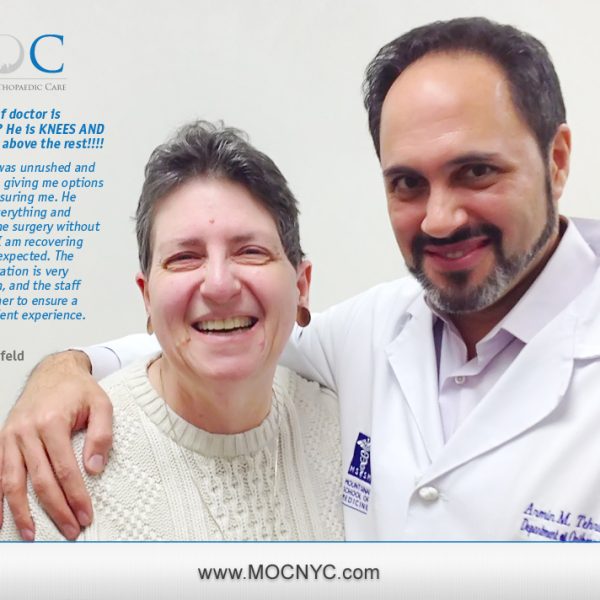
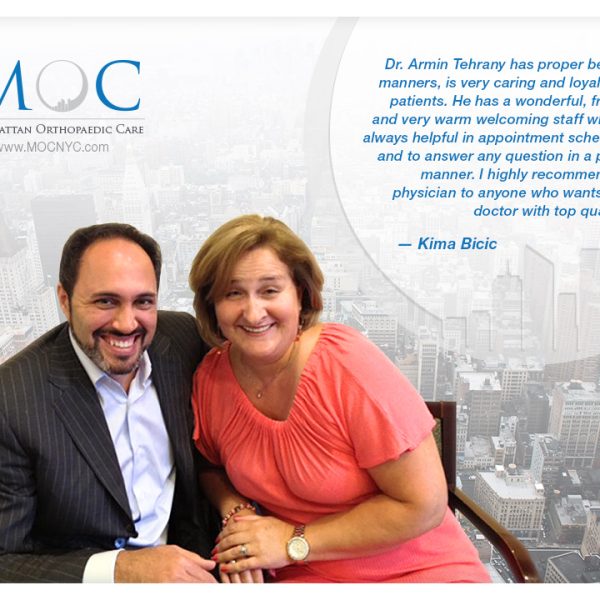
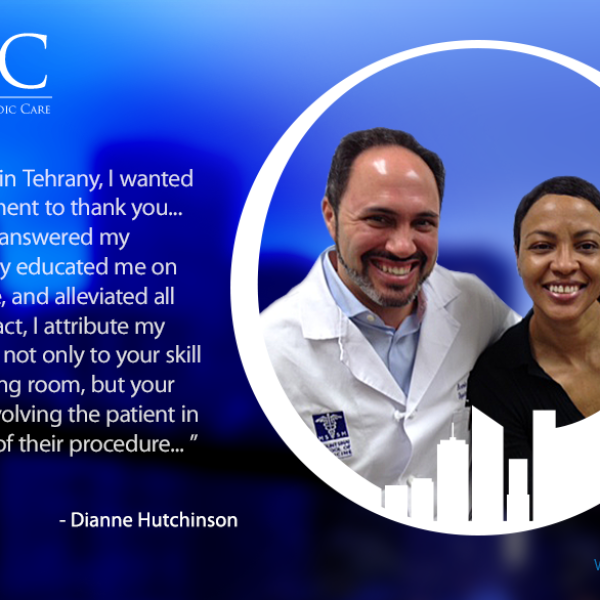
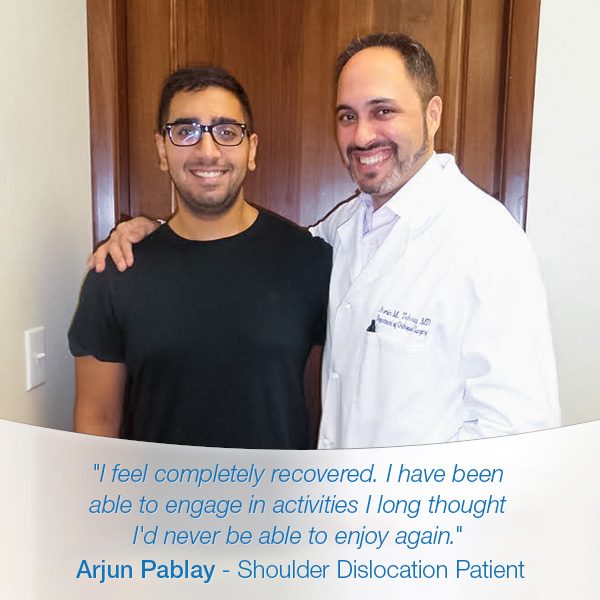
- Thousands of positive patient reviews reflecting trusted, patient-centered care
- Research is widely published, supporting the success of his treatment for various conditions affecting the shoulders and knees
Book a consultation at our Staten Island or Manhattan office to discuss whether biceps tenotomy is right for you.
Frequently Asked Questions
Will I lose strength after the procedure?
Most low-demand patients maintain functional strength for daily activities. The procedure prioritizes pain relief over high-level athletic performance.
How long does recovery take?
Many patients resume routine activities within weeks, with continued improvement over time.
Is physical therapy required?
Physical therapy may be recommended to optimize mobility and functional recovery.
Is this procedure right for me?
Candidates over 60 with chronic biceps tendon pain often benefit from tenotomy. A consultation determines suitability.
Take the Next Step Toward Pain Relief
Chronic shoulder pain does not have to limit daily life. Biceps Tenotony offers an effective solution for older, low-demand patients seeking symptom relief.
If you are exploring treatment options in Staten Island (NYC), expert evaluation is the first step.
Learn More About Bicep Tenotomy
Discover informative articles and patient reviews.